Sourcing Catholic Rosaries in Yiwu, China
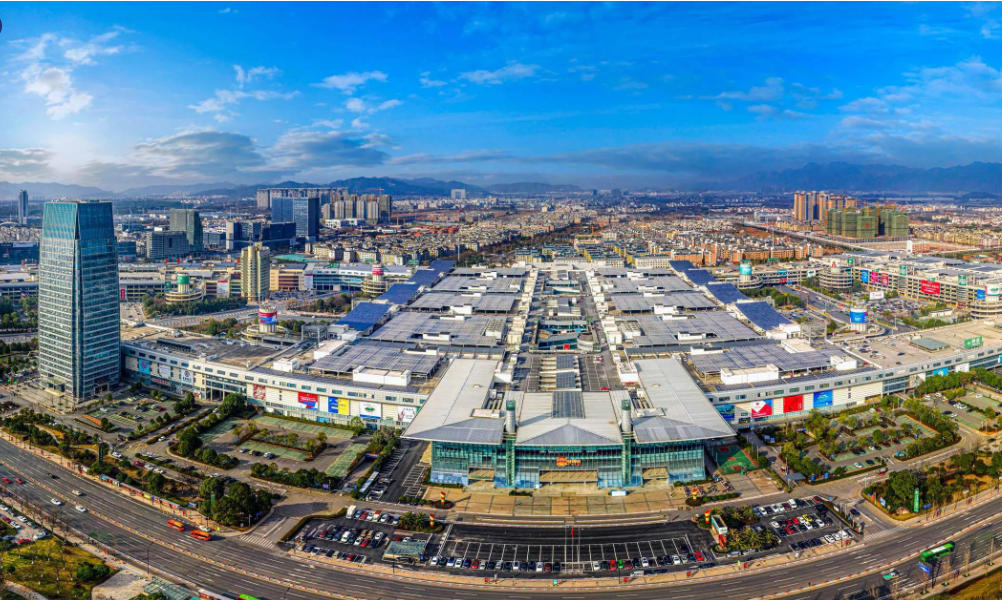
Every year, thousands of importers land at Yiwu Yiting Airport with a carry-on bag and a spreadsheet full of product codes. They’re headed to the Yiwu International Trade City — five districts, 75,000 booths, and what may be the densest concentration of small-commodity suppliers on earth. For anyone buying Catholic rosaries at scale, Yiwu is where the journey usually begins.
We’ve been manufacturing and exporting Catholic rosaries from China for years. We’ve watched the Yiwu market evolve from a cramped open-air bazaar into a modern, air-conditioned trade complex that handles container-load orders as smoothly as sample requests. This guide is what we wish someone had handed us on our first trip.
Why Yiwu for Catholic Rosaries?
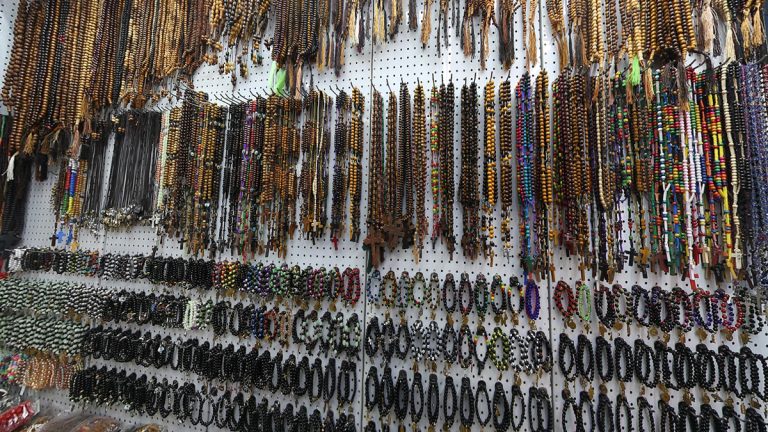
The short answer: concentration. District 1 of the International Trade City houses the majority of jewelry, craft, and religious accessories suppliers. Within a single morning’s walk, you can compare wooden rosaries, glass bead rosaries, pearl rosaries, crystal rosaries, and semi-precious stone sets from dozens of vendors — side by side, in person, with samples in hand.
The longer answer is price transparency. Because so many suppliers cluster in one place, you quickly develop a feel for what fair pricing looks like. A wooden rosary that quotes at $0.45 per piece at one booth might run $0.38 three aisles over with comparable quality. That comparison shopping doesn’t happen on Alibaba in the same way.
Navigating District 1: Where to Find Religious Items
The Trade City is divided into five districts. For Catholic rosaries and related religious accessories, District 1 (Fu Tian District) is your primary destination. Head for sections 1A and 1B — these floors concentrate artificial flowers, craft beads, and religious goods suppliers. Don’t be surprised if you find a booth selling Mardi Gras beads three doors down from a supplier with a full line of Catholic crucifixes. In Yiwu, everything lives together.
A few practical notes: the market opens around 9 AM and most booths close by 5:30 PM. Come weekdays for the fullest attendance. Bring a translation app or a local agent if your Mandarin is limited — while many booth operators can manage basic English for prices and specifications, detailed discussions about materials, coatings, or certifications will go better with interpretation support.
Materials You’ll Actually Find
Yiwu suppliers offer the full range of rosary bead materials. Here’s what you’ll encounter most often and what to watch for:
Natural wood beads — typically olive wood, sandalwood, or rosewood — are the most requested material for Catholic rosaries in the US and European markets. Expect to examine grain consistency, bead roundness, and whether the finish is a thin protective lacquer or a thick plastic-feeling coat. The difference matters a lot to end customers.
Glass beads remain popular for mid-range rosaries. The key variable is the core composition — hand-blown glass sits at one end of the quality spectrum, machine-pressed fire-polished beads at the other. Ask to see both under natural light. Surface iridescence on cheaper beads fades after handling; quality coatings hold their luster.
Pearl rosaries — both freshwater cultured and simulated pearl — attract strong demand for First Communion gifts and bridal markets. When evaluating freshwater pearls, check luster consistency across a full strand, not just the top beads on display. Simulated pearl quality varies enormously; scratch-test the surface coating if you can.
Crystal and semi-precious stone beads — amethyst, garnet, rose quartz, black agate — occupy the premium tier. Yiwu has suppliers specializing in these, though the best sourcing for semi-precious stones often takes you to a different origin: Guangzhou or Shandong. Yiwu traders frequently wholesale these materials in, so pricing reflects an extra margin.
MOQ, Pricing, and What to Expect
Most Yiwu rosary suppliers start MOQ conversations at 100 to 300 pieces per SKU. For a simple wooden rosary at $0.40–$0.60 per piece, that puts your minimum spend per style around $60–$180 — genuinely accessible for small importers or parish gift shops making their first bulk order.
Pricing tiers drop meaningfully at higher quantities. A rosary quoted at $0.55 for 200 pieces might hit $0.38 at 1,000 and $0.30 at 5,000. Know your volume target before you start quoting, and don’t be shy about letting the supplier see a realistic purchase order size. They’ve heard every number, and honesty speeds up the negotiation.
Quality Control: Don’t Skip This Step
The single most common complaint from first-time Yiwu buyers is that the shipment doesn’t match the sample. This isn’t always bad faith — production runs introduce variation, especially in natural materials. The safeguard is a pre-shipment inspection, either by a third-party QC firm or a trusted agent on the ground.
When we inspect Catholic rosary batches — whether our own production or merchandise we’ve sourced — we check six things: bead diameter consistency, string tension, clasp closure strength, crucifix finish, color accuracy against the approved sample, and packaging integrity. A 10-minute inspection checklist prevents the 10-week headache of a return shipment.
Working With a Factory vs. a Market Trader
Here’s a distinction most sourcing guides skip: the booths in the Yiwu market are not all factories. Many are trading companies that consolidate from multiple small workshops. That’s not inherently a problem — they often offer better variety, lower MOQ, and faster sampling. But it means the supply chain is one step longer, and quality control ownership is less clear.
For standard rosary designs at commodity price points, a market trader is often the right choice. For custom designs — specific bead sizes, specialty materials, branded packaging, OEM crucifix designs — going factory-direct is worth the extra sourcing effort. A factory can hold tolerances you can’t enforce through a middleman.
At ctoco.com, we operate as a direct manufacturer of Catholic and Islamic prayer beads, exporting to the United States, Brazil, Europe, and beyond. If you’ve done your Yiwu legwork and want to compare factory-direct pricing on wood, glass, pearl, crystal, or semi-precious rosaries, reach out. We’re used to working with importers who know exactly what they want.
Practical Tips Before You Go
Fly into Yiwu directly if connections allow — the city has its own airport (YIW) with flights from most major Chinese hubs. Alternatively, fly into Hangzhou (HGH) or Shanghai (PVG) and take a high-speed train; Yiwu station is about 90 minutes from Hangzhou East.
Book accommodation in Chouzhou North or near the Trade City itself. Many hotels in that corridor cater specifically to international buyers and have translation staff. The proximity saves time you’d otherwise spend in traffic.
Give yourself at least two full days in District 1 for a focused rosary sourcing trip. Day one for walking the sections, collecting business cards, and getting initial quotes. Day two for follow-up meetings with your shortlist and sample selection. Rushing it into a single morning is how buyers end up with the wrong product at the wrong price.
Yiwu isn’t magic — it’s logistics, concentration, and volume economics in one place. If you approach it with clear specs, realistic MOQ expectations, and a quality check plan, it delivers exactly what it promises: more product options at lower prices than almost anywhere else on earth. For Catholic rosary buyers, that’s a significant advantage. Use it well.